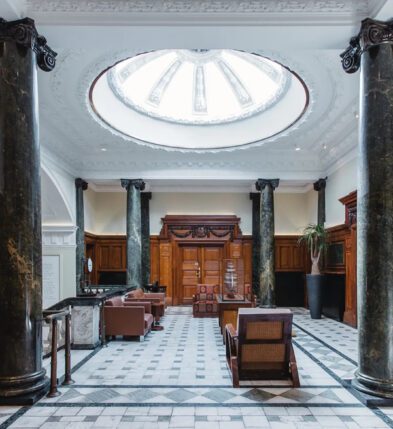
There is something about arriving by train that flying simply cannot replicate. Think of the Hiram Bingham pulling into Aguas Calientes with Machu Picchu waiting in the mist, or the Venice Simplon-Orient-Express gliding through the Alps with white-gloved service and the quiet theatre of a dining car at dusk. Rail travel has always had a romantic register: afternoon teas, wood-panelled cabins, the world moving past at a pace that lets you actually see it.
The overnight train, specifically, carries its own mythology. The clink of a glass in the restaurant car. The gentle rhythm of the tracks as you fall asleep somewhere between two cities. The particular pleasure of waking up somewhere new without the indignity of a 4am alarm.
But for years, reality lagged behind the romance. Ageing rolling stock, limited routes, and the unchallenged convenience of budget airlines left the sleeper train as something of a sentimental relic: beloved in memory, awkward in practice. That, finally, is changing.
The Design Has Caught Up
The aesthetic shift is hard to ignore. Italy’s Orient Express La Dolce Vita — designed by Milanese studio Dimorestudio — is a rolling homage to 1960s elegance, with mirrored walls, retro-chic private suites, and regional menus that read like a love letter to Italian cuisine. Routes connect Rome to Venice, Portofino, and Sicily. It feels less like transport and more like a moving hotel with excellent taste.
xx
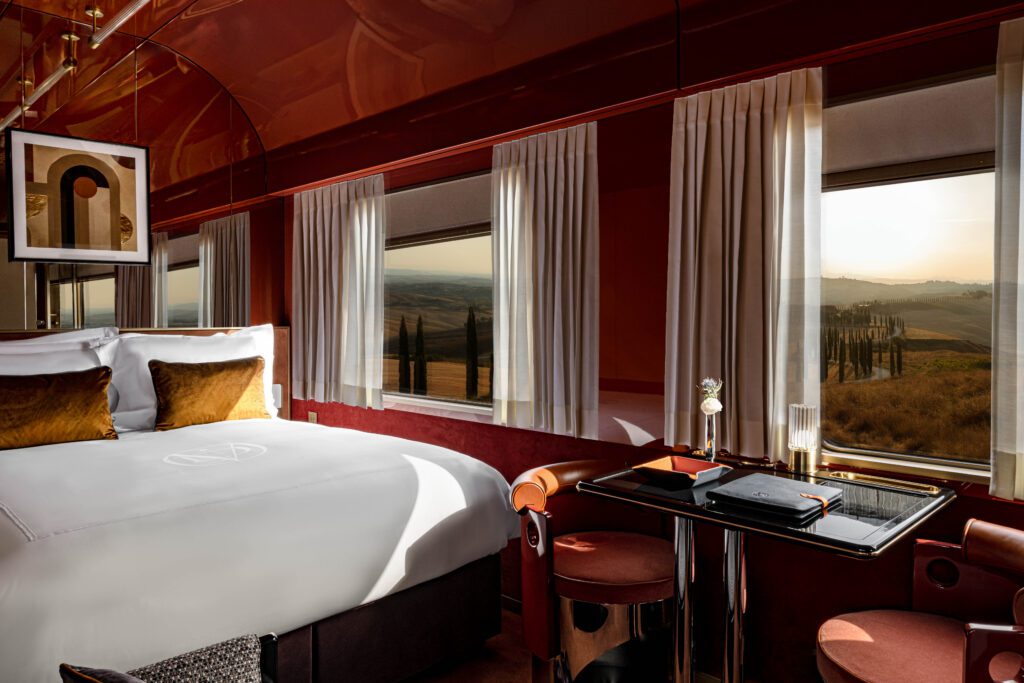
Image © Accor / Orient Express
XXX
In the UK, Belmond’s Britannic Explorer launched in 2025 as the country’s first luxury touring sleeper train, weaving through Cornwall, the Lake District, and Wales. Interiors are by Albion Nord; the dining programme is by Michelin-starred chef Simon Rogan. Even the Venice Simplon-Orient-Express: already iconic, has pushed further still, with a sleeper suite designed by French artist JR, complete with oculi skylights for stargazing as the Alps slide past.
Even the more accessible end of the market is being redesigned. Nightjet’s next-generation carriages — now rolling out across routes including Vienna–Rome and Munich–Venice — feature en-suite showers in every sleeper compartment and new solo “mini cabin” pods in couchette cars, offering genuine privacy at a fraction of the luxury price point.
These aren’t nostalgia projects. They are serious design propositions, and they are shifting what overnight travel looks like at every budget. (If you’re considering a train journey as the backdrop for something truly special, we’ve written about the most romantic ways to travel.)

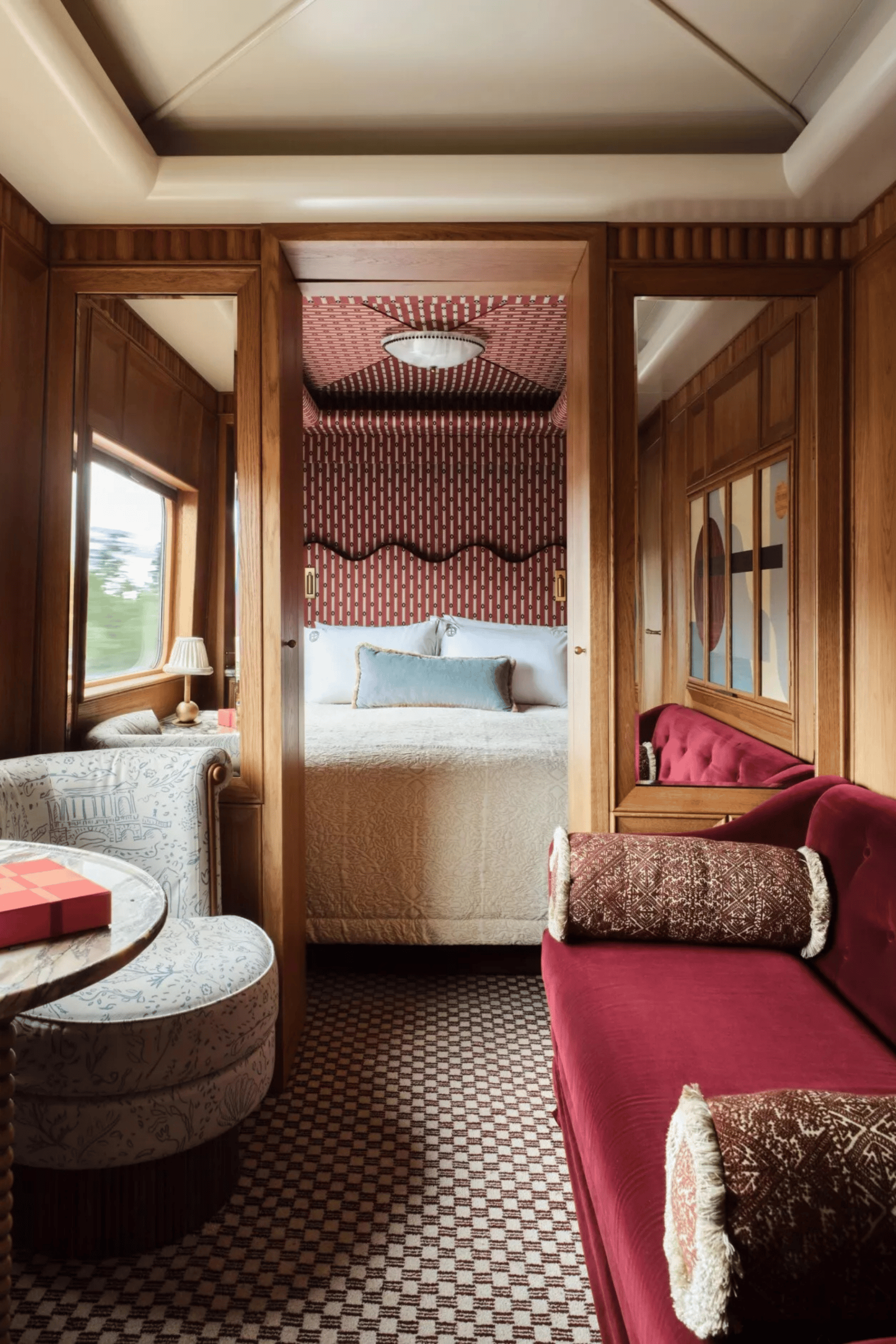
Image © Accor / Orient Express
New Routes Worth Knowing
The route map is expanding faster than most travellers realise — and independent operators are leading the charge. European Sleeper, a community-owned Belgian-Dutch cooperative, has quietly built one of the most interesting networks on the continent. Where larger state operators have retreated, most notably when ÖBB and SNCF discontinued all Nightjet routes to and from Paris in December 2025 following a withdrawal of French government subsidies, European Sleeper has stepped in. Their Paris–Berlin service launched in March 2026, filling the gap directly. Brussels–Prague runs three times a week. And from September 2026, a new Brussels–Milan route will thread through Cologne and Switzerland to northern Italy, with fares starting at €49.99. The map is filling in, city by city, on a model that requires no government subsidy to function.
Nightjet, meanwhile, continues to expand its own network across Austria, Germany, Italy, and the Benelux countries, with new rolling stock strengthening routes that have been running for decades. Across Scandinavia, overnight connections are heading further north, with Stockholm to Lapland among the routes gaining frequency.
Beyond Europe, the story is equally compelling. In the US, Amtrak is introducing a new fleet of Siemens-built trains this summer, with the Cascades route connecting Vancouver, Seattle, and Portland through some of the Pacific Northwest’s most spectacular scenery — among the first to benefit. It won’t transform American rail overnight, but it signals that the momentum is genuinely global.

Image © Ricardo via Unsplash
The Smarter Way to Travel Right Now
There is also a more pragmatic case to be made. With Lufthansa cancelling tens of thousands of flights through autumn, fuel costs at historic highs, and Gulf airspace still disrupted, the overnight train offers something the airport increasingly cannot: a fixed, land-based journey that doesn’t shift in price or availability with the news cycle. You board in one city, sleep, and wake up in another. No transfers, no security queues, no 4am alarms for a 6am flight.
The economics are worth running. A couchette berth on European Sleeper from Brussels to Milan at €49.99 is also a hotel night saved. On longer European routes, the overnight train frequently undercuts the total cost of flying once transfers and accommodation are factored in. It’s not always the case: availability and route coverage remain real considerations, but the gap is narrowing considerably.
None of this is to say sleeper trains are perfect. Coverage outside Western Europe and a handful of global corridors is still patchy. But for city pairs where the option exists, the calculus has shifted.
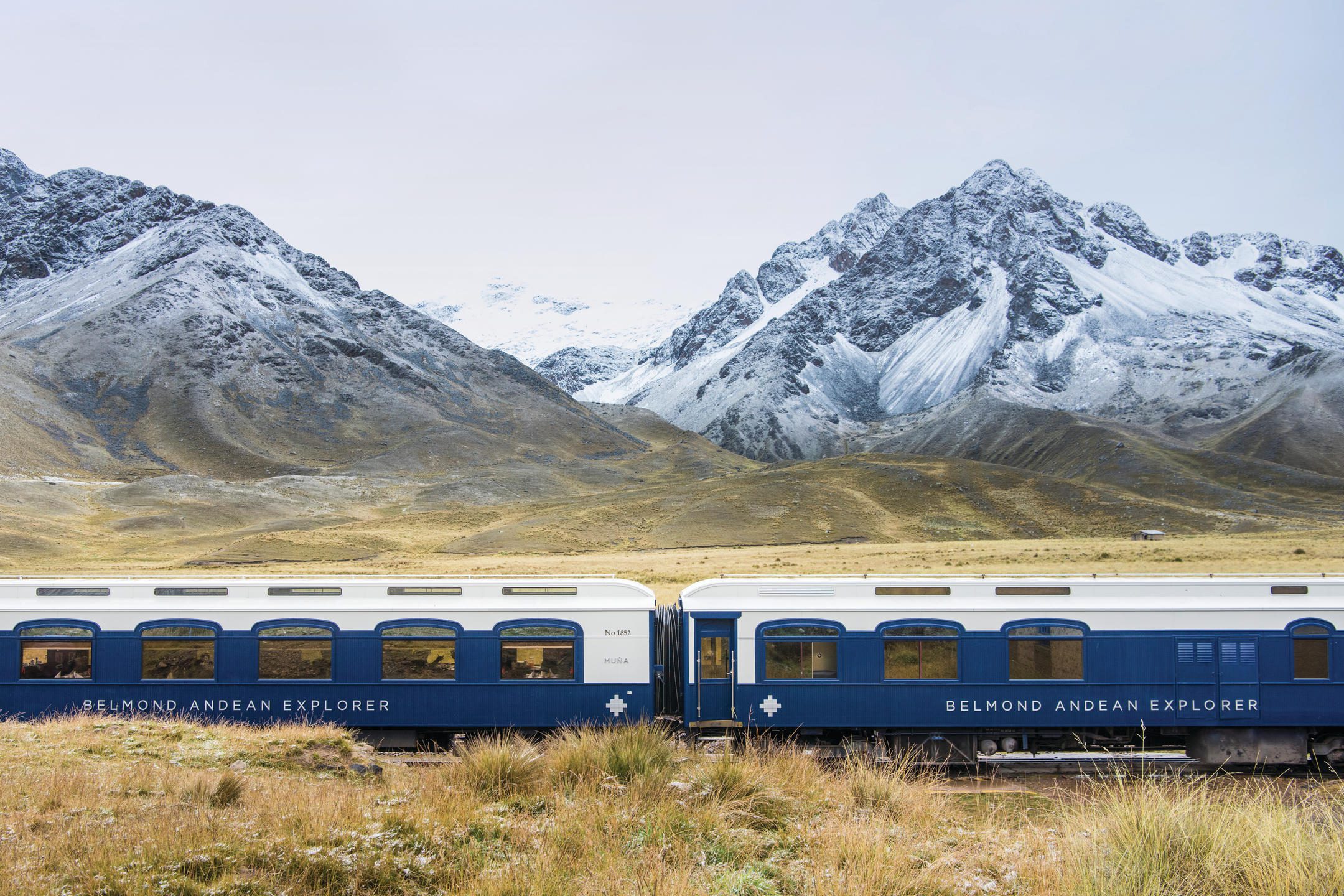
Image © Belmond
The Trains to Know
European Sleeper — Brussels–Prague and Paris–Berlin, both running three times weekly. Brussels–Milan launches September 2026. Community-owned, independent, and genuinely affordable. From €49.99.
Nightjet (ÖBB) — The workhorse of European sleeper travel, with an expanding network across Austria, Germany, Italy, and the Benelux. New-generation carriages rolling out now, with en-suite showers and solo mini cabin pods.
Orient Express La Dolce Vita — Italy’s most stylish train, with routes from Rome to Venice, Sicily, and the Ligurian coast. Design-forward and unapologetically glamorous.
Belmond Britannic Explorer — The UK’s first luxury touring sleeper, covering Cornwall, Wales, and the Lake District. Three- and six-night itineraries.
Caledonian Sleeper — London to the Scottish Highlands overnight. A classic route, recently refurbished, and still one of the most atmospheric journeys in Britain.
Belmond Andean Explorer — South America’s first luxury sleeper, travelling through the Peruvian Andes at over 4,000 metres. Cusco to Lake Titicaca and Arequipa. Pair it with a visit to Machu Picchu for the ultimate Peruvian rail journey.
The overnight train never really went anywhere. It just waited for the rest of us to catch up.